|
|
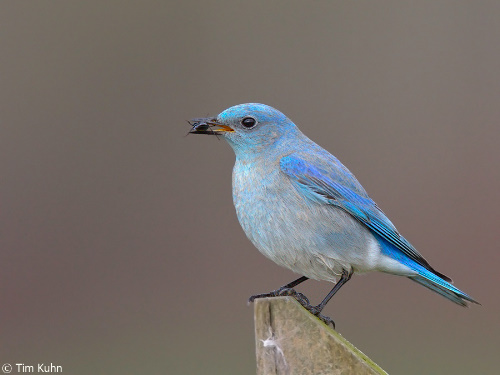
This Mountain Bluebird was in the east meadow on 4/11/2003,
one of several interesting migrants to be seen in the park. Photo by Tim Kuhn.
|
 |
START TIMES
Thursdays through September 17th, 6:30 a.m.
See the 2026 schedule
RECENT SIGHTINGS BLOG
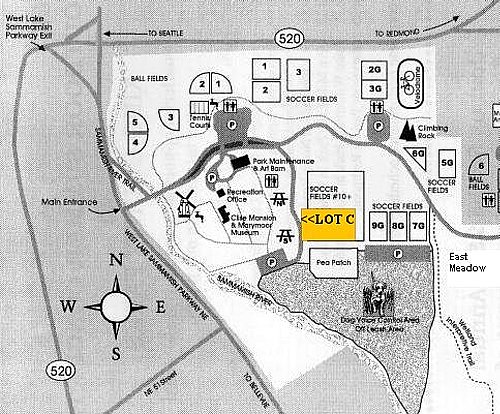
We meet in Lot C, the small paved lot just north of the Community Gardens, on the way to Lot D, the Dog Area parking lot (We park in the handicapped parking for the concert venue, but it is not restricted to handicapped-only the rest of the time). It is usually most recognizable by the arrival of several cars just before and at the Start Time, though there is also a small sign.
We walk west from there to the slough trail, which runs south along the river to Lake Sammamish, then curves back to the northeast to the Interpretive Lot (Lot G). We then walk west back to the cars with a detour through the Community Gardens. Total distance is about 3 miles, but we often spend 4+ hours on the walk. Some of us then walk around Clise Mansion, and then head over to the Rowing Club at Marymoor West.
You can join us for an hour or two or for the whole morning.
Be prepared with good shoes or boots (as appropriate), proper clothing, snack, etc. In winter, tall rubber boots are sometimes necessary.
If you would like to join us, please email me for information. -- Michael Hobbs
|
 |
Birding at Marymoor Park
By Michael Hobbs birdmarymoor@gmail.com
Adapted from an article in WOSNews 60, April/May 1999, the newsletter of the Washington Ornithological Society
Updated 2/2/2007
Marymoor Park, located at the north end of Lake Sammamish in Redmond, has been called the jewel of the King County parks system. At over 600 acres it is quite large for a suburban park. It is also one of the most heavily used parks around with more than 3,000,000 visitors annually. Much of the park has been developed for active recreational usage with soccer fields, tennis courts, softball diamonds, picnic areas, a concert venue, a velodrome for bicycle racers, a rock climbing wall, an R/C model airplane park, and one of the largest off-leash dog area in the county. However, the park also features large natural areas and a 1.5-mile-long nature trail. The birding possibilities at Marymoor should not be overlooked.
I’ve been going birding at Marymoor Park every week since April 1994. For the preceding four years I had birded only in the spring, until I realized that the birding was good there all year round. In the ~1800 visits I’ve made, I’ve been rewarded with sightings of 232 of the 246 species on the park list, including several species which are very unusual for King County. At least 50 species can be seen at Marymoor on a weekday morning any week of the year, with spring and fall totals often reaching 65-70+.
In the summer, the park is host to many breeding species, including Wood Duck, Bald Eagle, Red-tailed Hawk, Barn Owl, Virginia Rail, Rufous and Anna’s Hummingbirds, Willow Flycatcher, Western Warbling Vireo, Bewick’s and Marsh Wrens, Swainson’s Thrush, Cedar Waxwing, Northern Yellow Warbler, Common Yellowthroat, Savannah Sparrow, Black-headed Grosbeak, Lazuli Bunting, and, unfortunately, Brown-headed Cowbird. Purple Martins nest in plastic gourd nests near the Lake Platform, as well as at houses in the northeast corner of the lake, and occasionally in snags in the park.
In the winter, ducks are numerous, and sparrow watching can be quite good, with Song, White-crowned, Golden-crowned, Fox, and even White-throated Sparrows being common. Raptors are also common, notably Merlin, Red-tailed and Cooper’s Hawks, and Bald Eagles. Northern Shrike and Western Meadowlark are often found, especially in the East Meadow.
Marymoor Park is also a good place to find birds more typically associated with eastern Washington. Mourning Dove, Mountain Bluebird, Ash-throated Flycatcher, Say’s Phoebe, Eastern and Western Kingbird, Nashville and MacGillivray’s Warblers, and Lazuli Bunting have all been recorded in the park multiple times, mostly during migration.
Eastside Audubon has adopted the park, and has marked and maintains several trails, most notably the main Bird Loop. The trail features the best birding opportunities. It runs from the western dog area parking lot (Lot D), south along the slough to a lake platform, then turns northeast, and runs back to its nominal start at the nature trail/dog area parking lot (Lot G), and the connection trail between those lots. I walk it “backwards” as described here, since I like to walk the slough earlier in the morning. Because of heavy use on weekends, weekday mornings are usually the best time to visit. But many people start at the east end in Lot G. There are birding kiosks at both of these starting points.
Click here for views of the trail
The slough portion runs through riparian habitat. This area was impacted heavily by off-leash dogs, damage that the Corps of Engineers and SODA (the dog-area advocacy group) have repaired with a lot of mitigation work. This area is very good for sparrows in winter and for Willow Flycatcher, Common Yellowthroat, and Wilson’s and Orange-crowned Warbler in spring and summer. Western Tanager are often seen here in migration. Starting in 2012, herons began building a heronry right in the busiest part of the off-leash park. There are now around 75 nests, making it one of the biggest heronries around.
The slough itself is great for ducks, coots, grebe, Belted Kingfisher, Spotted Sandpiper, Wilson's Snipe, and American Beaver. Check the air above for five species of swallow and for Vaux’s Swift in spring and summer. Especially in June, look for large numbers (50-100) of black swift above the slough or the lake.
South of the dog area, the trail goes through the largest forested portion of the park – a particularly good place to find both Western Wood-Pewee and Western Warbling Vireo. All five common woodpeckers may be nesting in these woods. There are a few places where you can see into the slough from this section. In summer, look for Spotted Sandpiper on the lily pads. Tree Swallows, and Wood Duck nest near here as well. The portion of the trail near the lake is on a raised boardwalk. During late spring and summer, check the area where the boardwalk starts for Wilson’s and Yellow Warbler, and for Cedar Waxwing, Red-breasted Sapsucker, and Downy Woodpecker. In 1998, a Red-eyed Vireo nested just above the trail there.
At the lake platform, scan the waters for Western, Horned, and Pied-billed Grebe, Common Loon, and just about any species of duck in winter, and check the trees for Bald Eagle.
After the lake platform, the boardwalk turns northeast and runs through a cattail marsh which, despite being infested with purple loosestrife and garden loosestrife, is very good for Marsh Wren and Virginia rail. During May, June, and July, you can usually see a male Rufous Hummingbird perched on top of one of the short trees there. At the end of the boardwalk is another stand of tall trees which can be very good for Black-headed Grosbeak and Swainson’s Thrush in summer. A Blue-gray Gnatcatcher was found in the ash trees there in October, 1999; at the time only the fourth state record for that species.
The trail then goes through some low shrubbery and twists its way to a small footbridge. The hundred feet preceding the footbridge can occasionally be filled with birds – one day, on this very short stretch, I found over 20 species. Around the footbridge, Long-tailed Weasel can sometimes be seen.
After the footbridge, the trail forks around the East Meadow. One can walk either way; the trails meet up again at the north end of the meadow. The East Meadow is home to many Savannah Sparrow in summer. In winter it is the best place to check for Northern Shrike and Western Meadowlark. This is the area where Mountain Bluebirds have been observed several times during spring migration, and where Ash-throated Flycatcher has been seen in an astonishing 10 different year! The meadow is also used by American Barn Owls during hours of darkness.
To make the trail a loop, you can either cut through the dog area or walk along the south edge of the grass soccer fields just north of "Snag Row". In spring and summer, the dog-area route can be rewarding, especially if you check the row of willows for birds. In fall, we have found Lapland Longspur and Vesper Sparrow in the northeast corner of the Dog Meadow. The soccer fields are excellent in fall and winter for Mew Gull, Canada, Cackling, and Greater White-fronted Geese and the occasional Snow Goose. American Pipit can often be found in fall on the fields as well. In the fall of 2004, a Buff-breasted Sandpiper was found; later the same fall a Pectoral Sandpiper appeared, both with Killdeer flocks. On August 30, 2005, the state's first Smith's Longspur was eating grass seed on the grass soccer fields amongst a large flock of House Finches.
Other parts of the park are also good for birds. Clise Mansion, at the heart of Marymoor Park, was built in 1904 as a hunting lodge for Seattle businessman James W. Clise, on property he called “Willowmoor.” Around the mansion are just about the only conifers in the park; they are worth checking for their associated species such as Chestnut-backed Chickadee, Golden-crowned Kinglet, and Townsend’s Warbler. The non-native plantings around the mansion can be good during spring migration for Western Tanager, Bullock’s Oriole, and a variety of warblers. In the pre-dawn or in evening, check the cedars near the windmill for Barn Owl.
On the other side of the slough, the Marymoor West unit offers some different birding possibilities. You can park at the Sammamish Rowing Club parking lot off West Lake Sammamish Parkway (at about 48th St.), and walk to the slough. Along the path are two ponds that have proven good for the shyer ducks.
To get to Marymoor Park, take SR 520 east from Seattle to the West Lake Sammamish Parkway exit and follow the signs. The entrance to the park is one block south of the exit.
How to Get There
|
|
